Who Is Sidi Hrazem?
A Refined and Expanded Essay with Historical Correctness
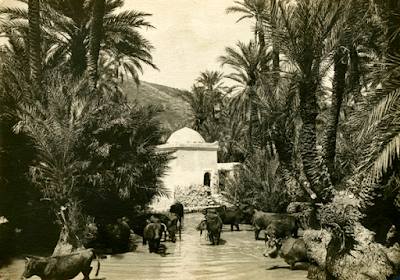
Sidi Hrazem, more precisely Sidi ‘Ali Ben Hrazem, is one of the luminous names in the spiritual and scholarly heritage of Fez. Though widely remembered today through his son, the saint Sidi Mohammed Ben ‘Ali Ben Hrazem, whose mausoleum and healing thermal spring east of Fez bear his name, the father himself stands as a towering figure of his age: a jurist, a Sufi master, and a guide whose influence radiated across the Maghreb.
Born in Fez toward the end of the 11th century, Sidi ‘Ali Ben Hrazem lived through a period of intense religious debate and intellectual transformation. He emerged as a respected faqih (jurisprudent), a Sufi master, and a teacher whose disciples became some of the great saints of North Africa.
Among his most remarkable students were:
Sidi Boumediene (Abu Madyan Shu‘ayb) of Tlemcen, later recognized as the spiritual pole (al-qutb) of the Maghreb,
Sidi Mohammed al-Maghri of Safi, the learned organizer of the grand Hajj caravans departing from Morocco and the western Sahel.
Through such disciples, the teachings of Sidi ‘Ali Ben Hrazem traveled from Fez to the far reaches of Morocco, Algeria, and beyond.
His Early Position on Al-Ghazali — and His Transformation
Sidi ‘Ali Ben Hrazem lived during the reign of the Almoravids, a dynasty known for its strict interpretation of Sunni orthodoxy. In this climate, the writings of Imam Abu Hamid Al-Ghazali were heavily criticized; some scholars accused him of introducing speculative mysticism that blurred the strict boundaries of creed.
Sidi ‘Ali Ben Hrazem initially stood with the Almoravid jurists, supporting the condemnation and even the burning of Al-Ghazali’s books, believing they strayed from the clear path of the Qur’an and the Sunnah.
But the story does not end there.
According to the great hagiographer Ibn Zayyat in Attashawwuf ilā Rijāl at-Tassawwuf, Sidi ‘Ali Ben Hrazem later had a vision in his sleep in which he was informed, with divine clarity, that the writings of Al-Ghazali were indeed in profound conformity with the Qur’an and the Prophetic tradition.
This dream transformed him.
He abandoned his previous stance, embraced Al-Ghazali’s spiritual insights, and became one of the earliest Moroccan scholars to recognize the depth and orthodoxy of Al-Ghazali’s work. This shift is a testimony to his humility, his sincerity, and his openness to divine correction.
A Contemporary of Great Saints
Sidi ‘Ali Ben Hrazem lived during a golden age of Moroccan sainthood. He was a contemporary of:
Sidi Bennour
Moulay Bouchaib Erredaad
Moulay Abdallah Amghar
is revered across Morocco for their piety, miracles, and spiritual leadership.
These saints formed a constellation of holiness during the late Almoravid period and into the early Almohad Dynasty, when Sidi ‘Ali Ben Hrazem passed away.
His Death and His Legacy
Sidi ‘Ali Ben Hrazem died in 560 Hijri (1165 CE), near the beginning of Almohad rule. His life bridged two great dynasties and two intellectual climates. He remains, in the writings of Sufi historians, a figure of balance: a jurist who embraced spirituality, a scholar who accepted divine correction, a master whose disciples shaped the mystical landscape of the Maghreb.
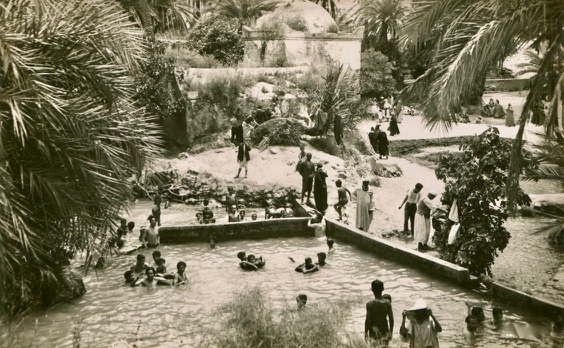
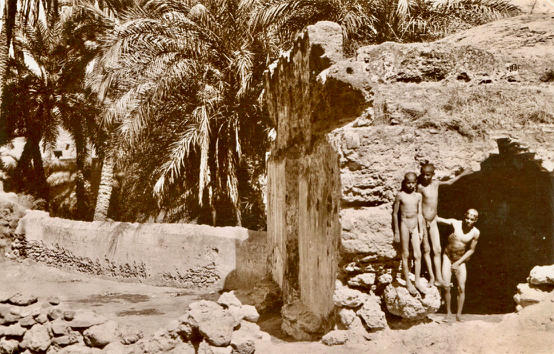
His son, Sidi Mohammed Ben ‘Ali Ben Hrazem, continues his legacy. Buried at the thermal spring that bears his name, the site’s warm, mineral-rich waters have long been believed to cure kidney disorders and internal ailments. For centuries, Moroccans have traveled to Aïn Sidi Hrazem not only for healing, but also to seek blessings (baraka) from the saint.
His Place in Sufi Literature
The life of Sidi ‘Ali Ben Hrazem was preserved by:
Ibn Zayyat al-Tadili in Attashawwuf ilā Rijāl at-Tassawwuf,
and later by Sidi Mohammed al-Salih al-Majiri, who documented many saints of the Almoravid and Almohad eras.
Their writings ensure that his memory remains alive, not only as the father of a saint, but as a saintly scholar in his own right.
Keep exploring
Discover more stories from Morocco and beyond
Written by
Hamid Mernissi
I was born to travel the world. I am an anthropologist, a Sufi seeker and a student of life.
Comments
No comments yet. Be the first to share your thoughts!
Leave a comment