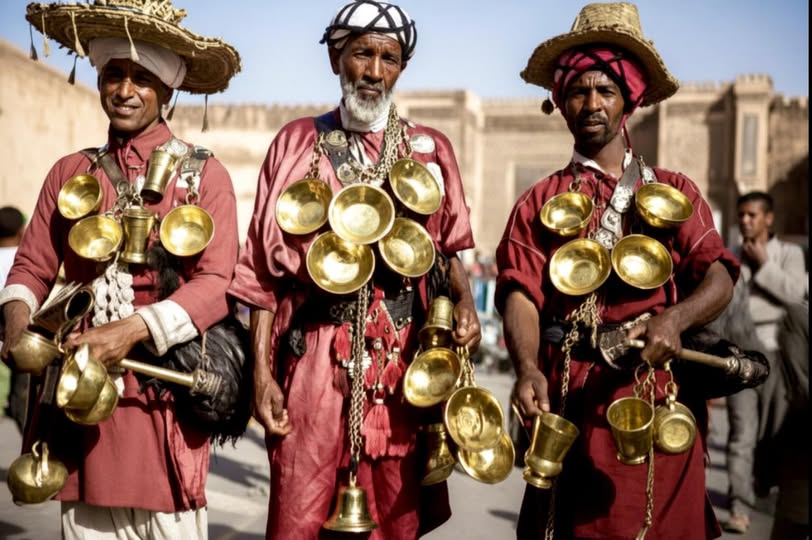
The Throne and The Heart
A Quiet Reflection on Faith and Authority
In the year 73 AH, only sixty-two years after the passing of the Messenger of God ﷺ,
Mecca, city of sanctuary, city of revelation, was no longer a place of peace. It was a place of siege. A place of fire. A place where the sacred and the political met in their most difficult form. At the center of this moment stood a man whose lineage alone was enough to carry the weight of an entire history: ʿAbd Allah ibn al-Zubayr. Son of al-Zubayr ibn al-ʿAwwam, disciple of the Prophet ﷺ. Son of Asmaʾ bint Abi Bakr, the woman of the two belts, the one who carried provisions in the earliest days of Islam. Grandson of Abu Bakr al-Siddiq. Nephew of ʿAʾisha, Mother of the Believers. Connected, in blood and memory, to the very foundation of the faith.
He was not only a man. He was a continuation. He was the first child born to Muslims
after the Hijra. A birth celebrated as if it answered a doubt, as if it broke a spell cast by those who believed that the new community would not endure. The Messenger of God ﷺ placed a date in his mouth, and in that gesture, something of the beginning remained with him.
Years passed. History unfolded. And, as with many beginnings, what started in unity found itself tested in division. ʿAbd Allah ibn al-Zubayr stood in Mecca as a caliph, not by ease, but amid fragmentation, rebellions in Iraq, shifting loyalties, and the steady rise of Umayyad power under Marwan and then his son ʿAbd al-Malik.
What followed was not a debate. It was a siege. Al-Hajjaj ibn Yusuf al-Thaqafi, a man of discipline and severity, was sent to end what remained. Mecca was encircled. The sacred was no longer protected from the ambitions of men. And in the end, ʿAbd Allah ibn al-Zubayr fell.
But death was not the end of the story. His body was raised, not in honor, but as a warning. Suspended before the people of Mecca, left to face the sky and the earth in silence.
Time passed. And then came a figure who did not arrive with power, but with something else.
Asmaʾ bint Abi Bakr. An old woman now, close to a hundred years of life behind her. A body weakened by time, but a presence untouched. She was summoned. She refused. Not out of defiance, but out of dignity. When al-Hajjaj came to her, he expected grief to break her, pain to silence her, age to soften her. Instead, she spoke.
Simply.
Without raising her voice.
Without changing her tone.
“I see that you have ruined his worldly life, and he has ruined your Hereafter.”
There are moments when words do not argue. They reveal. In that moment, power stood before truth and found no answer. She reminded him, without accusation, of who she was. Not by title,
but by memory. The one who carried food for the Messenger of God ﷺ and for her father in the earliest days. The one who stood firm when questioned by Abu Jahl and remained silent. And then she left him with a final reflection: That within his own people, there would be a liar and a destroyer. And that perhaps—without saying it directly—he should recognize where he stood.
He left her presence. Not defeated in battle but unsettled. The body of her son remained for some time before it was finally taken down, after the words reached the caliph.
He was buried. Quietly. And soon after, Asmaa herself left this world.
A Quiet Understanding
This is not a story of accusation. Nor a story of judgment. It is a moment in which something becomes clear: That from the earliest days, faith and power walked close to one another. Not always in harmony. That belief does not remove conflict. That proximity to the sacred does not prevent division. And yet, within all of this, there remains something constant: a woman standing at the end of her life, with nothing left to protect, except truth. Not loud. Not dramatic. Just present.
In the shadow of power, where men contend over authority, where the sacred is drawn into the affairs of rule and command, another understanding takes form, almost unnoticed.
Not in opposition,
not in protest,
but in distance.
Sufism did not rise in opposition to power, nor in alliance with it. It simply stepped aside. Not out of weakness, but out of clarity. Its concern was never the throne, but the heart. While others disputed authority over land and men, the Sufi turned inward, seeking authority over the self. For him, the greater struggle was not to govern, but to refine; not to command, but to align. And so, without declaring it, he withdrew, not from the world, but from its contests.
Keep exploring
Discover more stories from Morocco and beyond
Written by
Hamid Mernissi
I was born to travel the world. I am an anthropologist, a Sufi seeker and a student of life.
Comments (1)
hamid this words are so powerful and true god bless you ...
Leave a comment