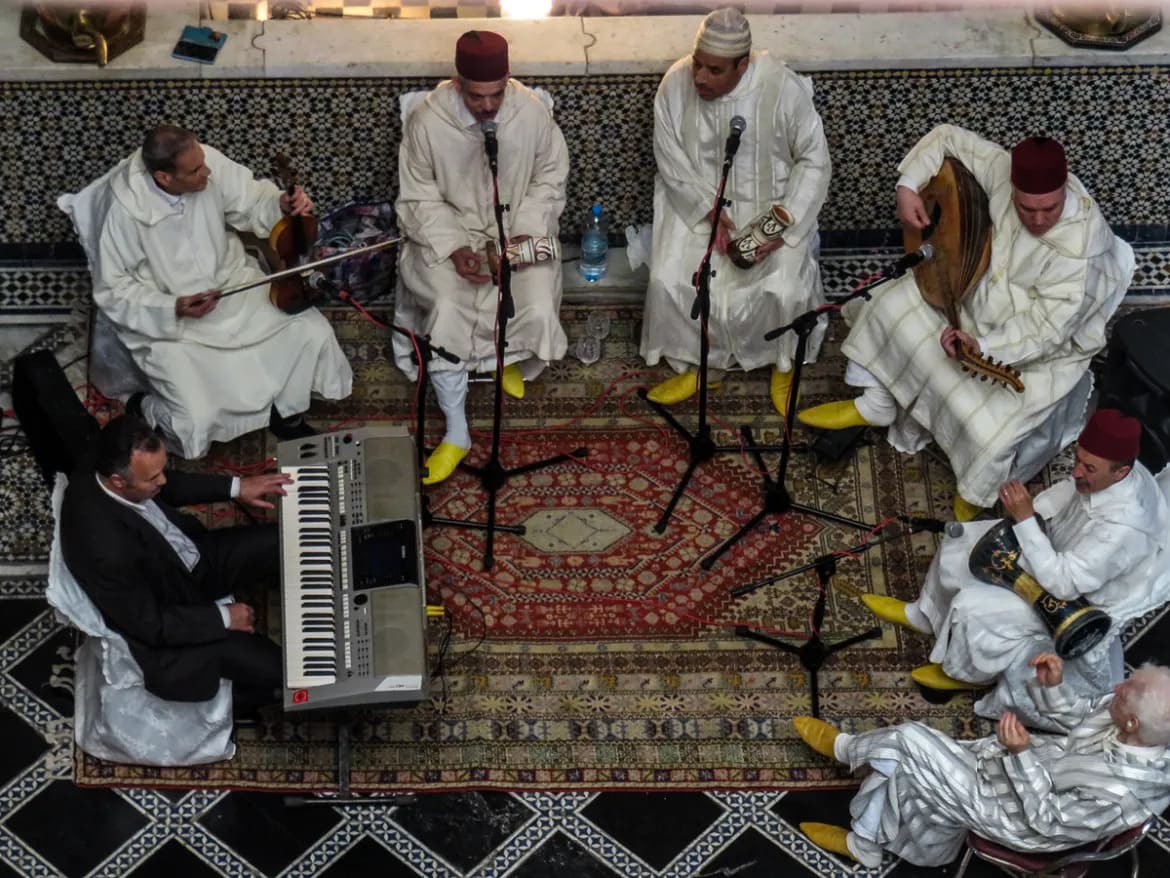
Fez: The Diadem of the West
What can I possibly say about Fez that has not already been said by countless writers, historians, stoics, and scholars? Yet, since I am that humble boy from Fez, I will dare to add this:
You enter Fez as one who is lost, and you leave it reborn.
Fez has never received the full measure of praise it deserves, as a city that has shaped global knowledge, refinement, and grace. If Baghdad, the Babylon of the East, was the jewel of civilization, then Fez was surely the diadem of the West.
Renowned for its beauty, its lush gardens, flowing waters, and luminous faces, Fez remains, even in the modern century, as Al-Bekri described it a thousand years ago:
“Beyond every home, a garden of diverse fruits, with brooks and streams flowing through its very heart.”
Abdelwahed al-Marrakchi, writing in the twelfth century, echoed this truth:
“The heartbeat of the nation, the essence of civility, and the fountain of learning is none other than Fez. Its people are the measure of wit, and their eloquence surpasses the world. Fineness and tact found their true meanings there.”
And humbly, I must agree, there is no city on earth like Fez.
Fez has always been a thriving metropolis: abundant in resources, fertile in its surroundings, rich in trees and water. I know of no other city that does not depend on another for its needs, save, perhaps, for perfumes from India. Fez is self-sufficient; she supplies the Mediterranean and the Sahel alike with the necessities of life.
Yaqut al-Hamawi also wrote of Fez as “a city of spring sources pouring into its river, a calm river born from fountains only three miles from the city’s heart, creating green groves along both banks.” Upon reaching the city, the Fez River divides into eight channels, turning six hundred mills that grind day and night without rest.
And yes, even in antiquity, every household had running water, small creeks flowing through each home, powered by a hydraulic mastery difficult to fathom today.
An old saying still whispers:
“If Fez were to shed its walls, the angels of beauty themselves would be revealed.”
But even angels are bound by their gardens. For roses, once plucked from Fez, are destined to perish.
I have witnessed that the feminine beauty of Fez is beyond the artist’s brush, almost lyrical, a living fairy tale. The women of Fez are not only stunning in grace and elegance, but they are treasures fit for kings, precious like manuscripts kept in cedar chests. Hidden in the total privacy of their homes, their allure is heightened by mystery. The prohibition of intrusion becomes, paradoxically, the source of infinite charm.
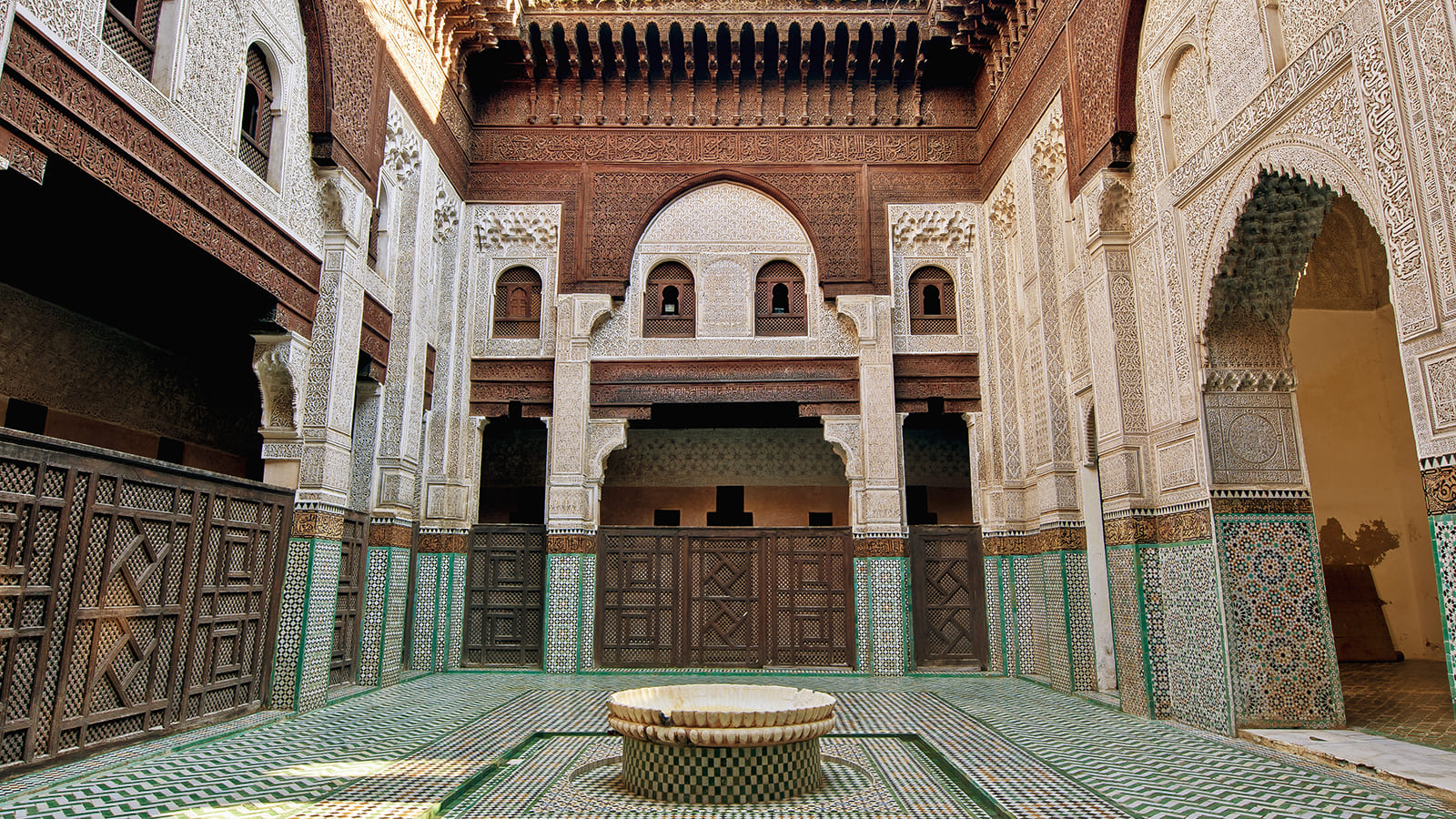
The houses of Fez stand shoulder to shoulder, as if guarding one another. Yet privacy remains sacred. You are never disturbed by a neighbor’s gaze or the wandering eyes of strangers. Every window opens inward, to your own patio, your fountain, your small paradise. Light, filtered through carved wooden screens, dances gently upon zellij tiles and plaster carvings.
Your rooftop is your suspended garden and your sunbathing terrace; your patio, a well of light and sound where the fountain murmurs like prayer. Within those walls, the city breathes, hidden, sheltered, serene.
When the French arrived, they brought their architectural style of exposure: wide windows, straight lines, and the illusion of openness. They built townhouses where you feel you are sitting on the roadside when you open your windows, or in the dark when you close them. They designed apartments where people are packed like sardines in a can, with thin, artificial walls that compromise privacy.
They called it modernity, but for us it was a kind of blindness. The Moorish style was made for Fez, and Fez, in truth, is the womb that conceived Moorish art.
From its courtyards, Andalusian palaces took their inspiration; from its fountains and carved stuccoes, Granada and Cordoba learned the language of beauty. The arches of Alhambra echo the whispers of Fez. The artisans who built those marvels carried within them the memory of the Fez medina: its geometry, its rhythm, its perfection.
Fez is not merely a city; it is a civilization that walks, prays, and dreams. Its streets may be narrow, but its soul is vast. The scent of jasmine and baked clay mingles with the call of the muezzin, and above every minaret, a dove circles in peace.
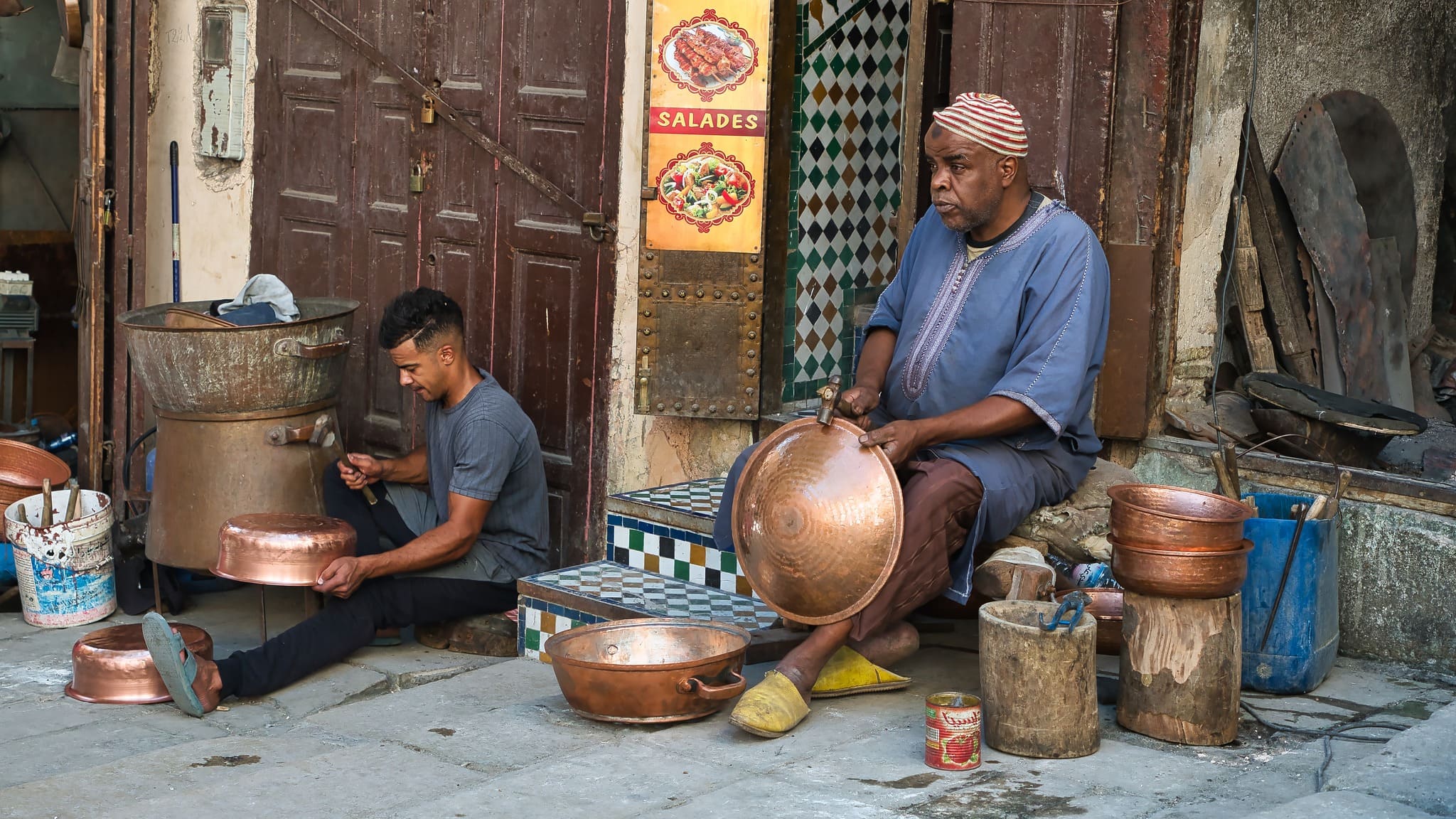
Time may have aged its walls, but it has not dimmed its essence. The fountains still murmur their ancient language, the artisans still carve beauty into stone, and the hearts of its people still beat with quiet pride.
Fez endures not as a relic, but as a living poem, a city that holds within its walls the very secret of harmony between man, nature, and spirit.
And as that humble boy from Fez, I can say with certainty:
When you enter Fez, you come as a wanderer.
When you leave, you are reborn.
Keep exploring
Discover more stories from Morocco and beyond
Written by
Hamid Mernissi
I was born to travel the world. I am an anthropologist, a Sufi seeker and a student of life.
Comments (1)
The beauty and loving light of this description and prose can only be outdone by the beauty of the fabled city thus sung. I long to wander hence. I long to be reborn. Inshallah
Leave a comment