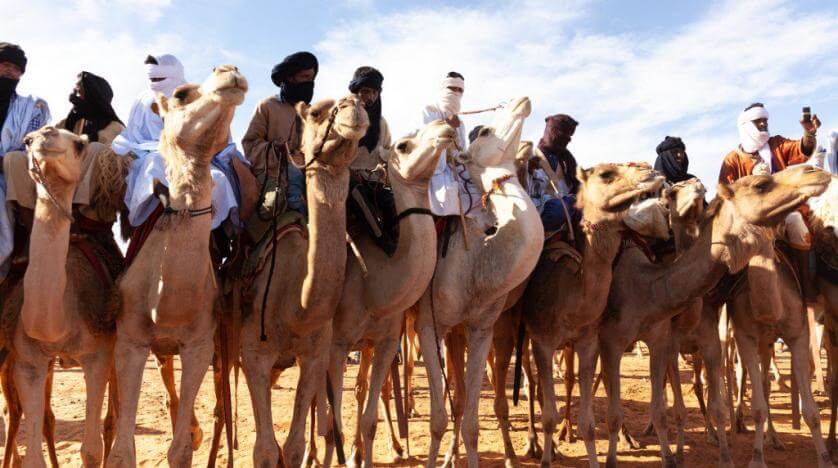
The word Moor is one of those names.
It did not rise from the desert, nor from the tongues of those who lived under its sun. It came from elsewhere, from Latin mouths, from European memory, “Mauri”, they said, pointing south, naming those who were Muslim, those who came from North Africa, those who crossed into Al-Andalus and left a mark too deep to be forgotten. The name remained. But it never belonged.
For under that single word 'Moor' lived many peoples. Berbers of the mountains. Arabs of the plains. Scholars, warriors, traders, mystics. A civilization, reduced to a name. But the Sahara remembers differently. It does not speak in generalities. It speaks in lineage, in belonging, in the quiet precision of who is whose son.
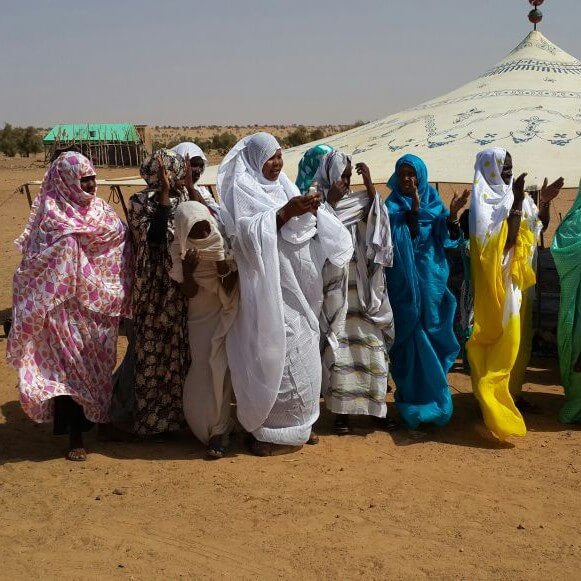
There, another name lives:
Bidhan.
Not a label. A formation. A people shaped not in one moment, but across centuries of movement, conflict, and reconciliation. Long before this name settled into meaning, the desert belonged to the Sanhaja, Berber tribes whose presence stretched across the vast silence of the Sahara. From them rose the Almoravids, men of discipline, of faith, who carried their order from the desert into cities, into kingdoms, into history. But power, like wind, does not stay. It passes. And when it passed, the desert did not empty. It transformed.
From the north came the Beni Hassan, Arab tribes. They did not arrive as visitors. They arrived as a force. Conflict followed. Long, patient, reshaping conflict, not only of land, but of language, of hierarchy, of identity. And then, something unexpected. Not disappearance. Not replacement. But fusion. From this meeting of Sanhaja roots and Hassanian presence, a new people emerged. Not purely Berber. Not purely Arab. But both. And more than both.
The Bidhan.
They spoke a new tongue, Hassaniya Arabic, carrying within it echoes of older worlds. They organized themselves in ways the desert understands:
tribes,
lineage,
honor,
memory.
Their society was not invented. It was negotiated. And so, when the outside world looked again, It saw them and called them once more:
Moors.
But this time, the word hovered above them, never fully touching the ground. Because what they were could not be reduced to what others called them.
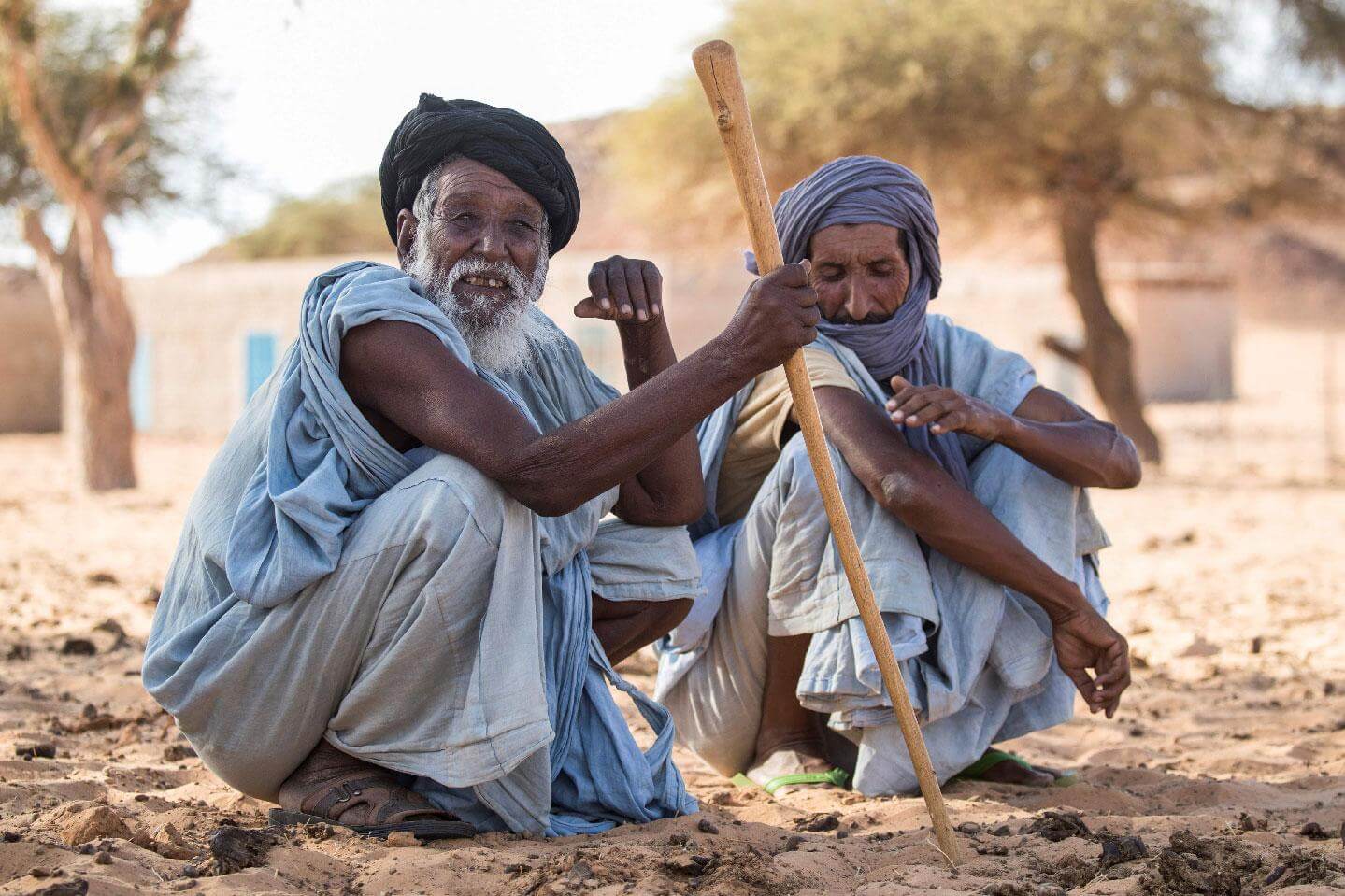
The Bidhan is not a name given. They are a history lived. The word Moor is one of those names. It did not rise from the desert, nor from the tongues of those who lived under its sun. It came from elsewhere, from Latin mouths, from European memory, “Mauri”, they said, pointing south, naming those who were Muslim, those who came from North Africa, those who crossed into Al-Andalus and left a mark too deep to be forgotten. The name remained. But it never belonged.
For under that single word 'Moor' lived many peoples. Berbers of the mountains. Arabs of the plains. Scholars, warriors, traders, mystics.
A civilization, reduced to a name. But the Sahara remembers differently. It does not speak in generalities. It speaks in lineage, in belonging, in the quiet precision of who is whose son.
There, another name lives:
Bidhan.
Not a label.
A formation.
A people shaped not in one moment, but across centuries of movement, conflict, and reconciliation.
Long before this name settled into meaning, the desert belonged to the Sanhaja,
Berber tribes whose presence stretched across the vast silence of the Sahara. From them rose the Almoravids, men of discipline, of faith, who carried their order from the desert into cities, into kingdoms, into history. But power, like wind, does not stay. It passes. And when it passed,
The desert did not empty. It transformed.
From the north came the Beni Hassan, Arab tribes. They did not arrive as visitors. They arrived as a force. Conflict followed. Long, patient, reshaping conflict, not only of land, but of language,
of hierarchy, of identity. And then, something unexpected. Not disappearance. Not replacement. But fusion. From this meeting of Sanhaja roots and Hassanian presence,
a new people emerged. Not purely Berber. Not purely Arab. But both. And more than both.
But this time, the word hovered above them, never fully touching the ground. Because what they were could not be reduced to what others called them.
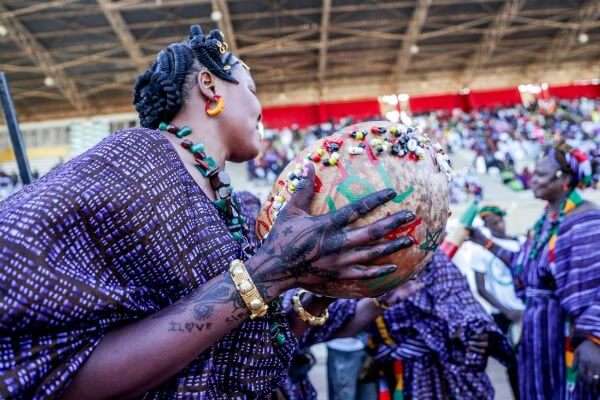
The Bidhan is not a name given. They are a history lived. To call them “Moors” is not entirely wrong. But it is not enough. It is to see from a distance what must be understood from within.
For in the Sahara, identity is not declared. It is carried.
In blood.
In language.
In memory.
In the way one belongs to the land and the land belongs to him.
Even today, the wind moves across Mauritania, across Western Sahara, across spaces where borders came late and never fully settled.
And in that wind, there is still a conversation:
between Sanhaja and Hassan,
between past and present,
between what was and what became.
Perhaps this is the deeper truth:
That the Bidhan are not the continuation of a single people, but the result of a meeting. A meeting that did not erase, but reshaped. A meeting that did not end in one identity but created another.
And as for the word Moor, it remains.
Useful, perhaps.
Familiar, certainly.
But incomplete.
Keep exploring
Discover more stories from Morocco and beyond
Written by
Hamid Mernissi
I was born to travel the world. I am an anthropologist, a Sufi seeker and a student of life.
Comments
No comments yet. Be the first to share your thoughts!
Leave a comment