Khénifra: The Hidden Heart of Morocco
Most travelers know Morocco through its imperial cities, deserts, and coastlines.
Few realize that the true heart of the country beats quietly in the Middle Atlas Mountains.
Nestled among cedar-covered mountains, rivers, springs, and highland pastures, Khénifra remains one of Morocco's least appreciated treasures. While many travelers pass through on their way to other destinations, those who stop discover a region that has shaped Morocco's geography, economy, culture, and environment for centuries.
Khénifra is not simply another mountain town.
It is Morocco's water tower.
It is the lungs of Morocco.
It is one of the country's most important reservoirs of natural wealth.
A Land of Water
Water is life in Morocco, and much of that life begins in the mountains surrounding Khénifra.
Just twenty kilometers from the city lies the village of Ain Leuh, whose name means "Spring of Timber." This remarkable region is home to dozens of natural springs that emerge from the heart of the Middle Atlas.
These waters give birth to the Oum Er-Rbia River, Morocco's second-longest river. Originating in the mountains, the river begins a long westward journey across the country, irrigating millions of hectares of farmland before reaching the Atlantic Ocean near Azemmour.
To the south, another great river begins its journey.
Near Ksabi, not far from Khénifra, rise the springs of the Moulouya River. Unlike the Oum Er-Rbia, which flows toward the Atlantic, the Moulouya travels north and east, nourishing vast agricultural lands before reaching the Mediterranean Sea.
Together, these river systems sustain communities, farms, orchards, and ecosystems across much of Morocco.
To understand Khénifra is to understand where Morocco's water begins.
The Lungs of Morocco
The Middle Atlas surrounding Khénifra contains one of the largest cedar forests in North Africa.
More than 84,000 hectares of magnificent Atlas cedar cover the mountains, creating an ecological treasure of immense importance.
These forests are far more than beautiful landscapes.
They regulate water cycles.
Protect fragile mountain soils.
Provide habitat for wildlife.
Store carbon.
And support traditional pastoral communities that have lived among them for generations.
The Atlas cedar is among Morocco's most prized timbers. For centuries it has been used in the construction of palaces, mosques, riads, and traditional homes. Its fragrance, durability, and beauty have made it one of the country's most valued natural resources.
Walking through these forests is one of Morocco's most rewarding outdoor experiences. Ancient cedar trees, mountain trails, hidden valleys, and panoramic viewpoints offer visitors a side of Morocco rarely seen by conventional tourists.
A Land of Marble and Stone
Beneath the forests and mountains lies another source of wealth.
The region around Khénifra contains significant deposits of red and gray marble, prized for their quality and beauty.
For generations, this stone has supplied Moroccan craftsmen, architects, and builders. From private homes to public buildings, from traditional architecture to modern construction, the marble of the Middle Atlas has helped shape Morocco's built environment.
Today, this marble is exported around the world, carrying a piece of Khénifra far beyond Morocco's borders.
The Homeland of the Zayan
Khénifra is also the cultural heartland of several important Amazigh tribes, including the Zayan, Beni Mguild, and Ait Ishaq.
These communities have shaped the identity of the Middle Atlas for centuries.
Known for their hospitality, resilience, courage, and deep connection to the land, they developed a way of life perfectly adapted to mountain environments.
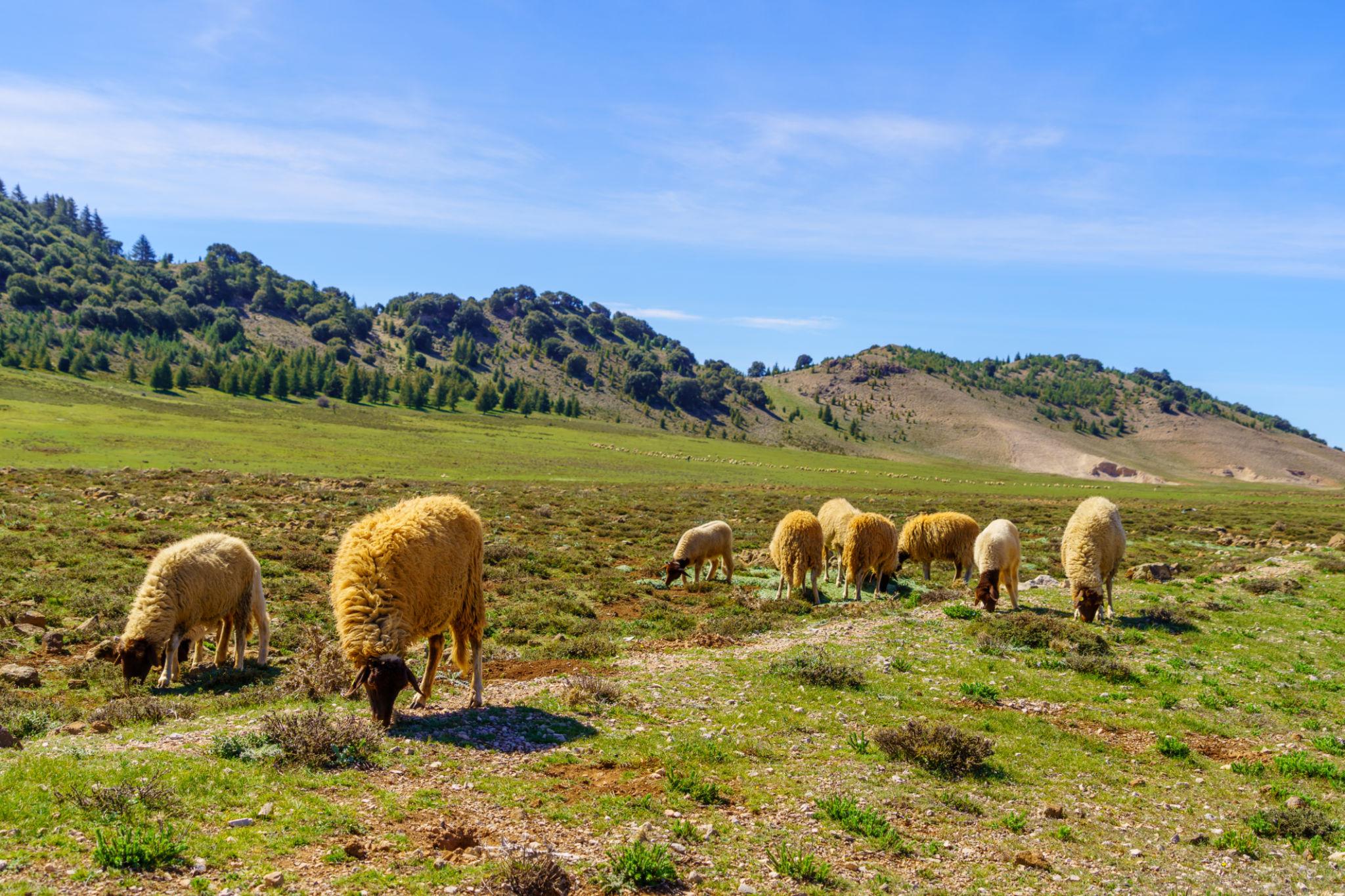
Many families continue to practice forms of seasonal transhumance, moving livestock between summer and winter grazing grounds according to ancient rhythms that long predate modern borders and roads.
Their traditions remain visible in everyday life.
In the architecture of villages.
In the seasonal movement of shepherds.
In the weaving of rugs.
In the preparation of food.
In the poetry, music, and oral histories passed from one generation to another.
The famous carpets of the region, woven from mountain wool and decorated with symbolic Amazigh motifs, are among Morocco's most distinctive artistic traditions.
A Paradise for Nature Lovers
For travelers seeking authentic experiences, Khénifra offers extraordinary opportunities.
Mountain trekking.
Forest walks.
Wildlife observation.
Birdwatching.
Rural tourism.
Traditional pastoral life.
Photography.
Cultural encounters.
The landscapes change constantly with the seasons. Spring transforms the mountains into a mosaic of wildflowers and green pastures. Summer brings cool mountain air and long days for exploration. Autumn covers the forests with rich colors, while winter often blankets the higher elevations with snow.
This is Morocco at its most natural.
It's most authentic.
It's most overlooked.
Discovering the Hidden Heart
In a country celebrated for its imperial cities and deserts, Khénifra remains one of Morocco's best-kept secrets.
It is a region that asks visitors to slow down.
To listen to the rivers.
To walk beneath ancient cedars.
To share tea with shepherds.
To discover traditions that have endured for centuries.
Khénifra may not appear on every travel itinerary.
Perhaps that is precisely its greatest strength.
For those willing to venture beyond the familiar, Khénifra reveals another Morocco.
A greener Morocco.
A quieter Morocco.
A Morocco where rivers are born, forests breathe, and mountain cultures continue to thrive.
The hidden heart of the Kingdom.
Keep exploring
Discover more stories from Morocco and beyond
Written by
Hamid Mernissi
I was born to travel the world. I am an anthropologist, a Sufi seeker and a student of life.
Comments
No comments yet. Be the first to share your thoughts!
Leave a comment